THE SHORT ANSWER
Near a small black hole, gravity pulls your feet much harder than your head, so you'd be stretched like a noodle. Scientists really call it spaghettification. Strangely, giant black holes are gentler at their edge, but nothing that crosses it ever gets back out, not even light.
Big facts, for scale
- A black hole's gravity is so strong that not even light can get out.
- Black holes don't roam around eating planets. Even if one as heavy as the Sun took the Sun's place, Earth wouldn't fall in.
- A black hole 10 times heavier than the Sun is only about 60 km across.
- If you could squeeze the whole Earth into a black hole, it would be about the size of a marble.
- The giant black hole at the centre of our galaxy is about 4 million times heavier than the Sun.
Read the comic
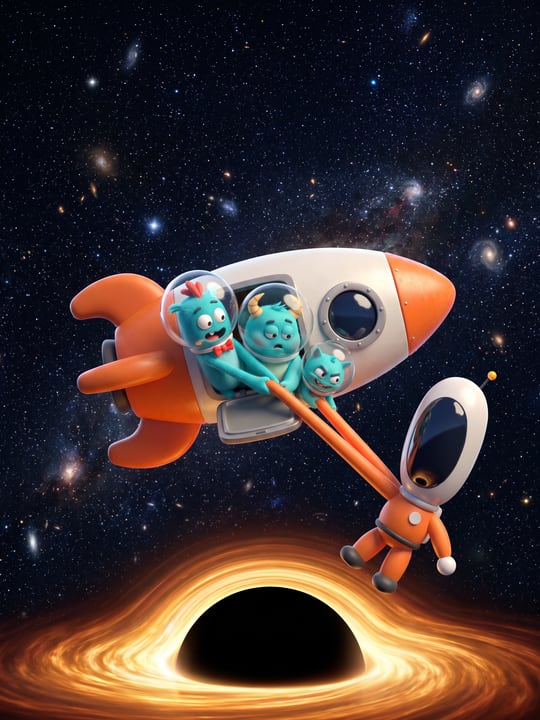
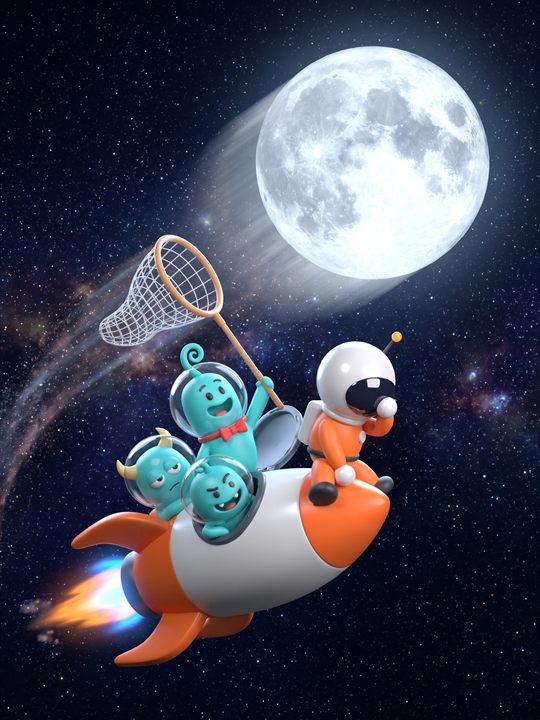
TINY HUMAN COMICS #2
Long Human
A funny, fact-checked comic adventure for ages 5 and up. Read it on any screen or print the PDF.
Buy the comic · $3.99For grown-ups and teachers
Ask: why does a bigger black hole stretch you less at its edge? (Its edge is much farther from its centre, so your head and feet are pulled almost equally.)
Sources
- NASA: What is a black hole? (for kids)
- NASA: black hole visualization (spaghettification; giant vs small)
- NASA's Chandra X-ray Center: how big is a black hole?
- NASA JPL: Earth squeezed to the size of a marble
Facts last checked 4 November 2026. Tiny Human's art and voices are made with AI tools; every fact is checked by a person against the sources above.